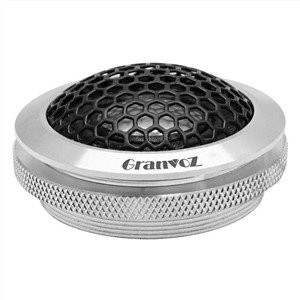
Hey there! If you're into car audio or just sound systems in general, you've probably come across the 6.5 Inch Midrange Speaker 50W. As a supplier of these bad boys, I often get asked how much power these speakers actually consume. It's a great question, so let's dig into it!
First off, let's talk about what the "50W" rating on the 6.5 Inch Midrange Speaker 50W means. This 50W is usually the speaker's power handling capacity. In simple terms, it's the maximum amount of power the speaker can handle before things start to go wrong, like overheating or even getting damaged. But that doesn't mean the speaker is always using 50 watts of power.
The actual power consumption of a speaker depends on a bunch of factors. One of the biggest factors is the volume level. You know how when you crank up the music, it sounds louder and more intense? Well, that's because you're feeding more power to the speaker. At low volumes, the speaker might use just a few watts. For example, if you're listening to some chill background music at a low volume, the 6.5 Inch Midrange Speaker 50W might only be consuming around 1 - 5 watts. This is because it doesn't need a whole lot of energy to produce those soft, gentle sounds.
But when you turn up the volume, things change. As you increase the volume, the amplifier sends more electrical power to the speaker to make it vibrate more vigorously and produce louder sounds. If you blast the music at full volume, the speaker could potentially consume close to its 50 - watt rating. However, it's not often that you'll be running the speaker at its absolute maximum all the time. Most of us listen to music at moderate volumes, which means the average power consumption is usually much lower than the 50 - watt peak.
Another factor that affects power consumption is the type of music you're playing. Different music genres have different dynamic ranges. For example, classical music often has a wide dynamic range, with soft, delicate passages followed by loud, powerful sections. During the soft parts, the speaker will use less power, while during the loud crescendos, it will consume more power. On the other hand, electronic dance music (EDM) typically has a more consistent high - energy beat, which means the power consumption is more evenly spread but can still be relatively high, especially if played at a high volume.
The efficiency of the speaker also plays a role in power consumption. Speaker efficiency is measured in decibels per watt per meter (dB/W/m). A more efficient speaker can produce more sound output with less power input. The 6.5 Inch Midrange Bullet Car Speaker and the 6.5 Inch Midrange Car Speaker in our lineup are designed to be relatively efficient. This means that for a given volume level, they'll use less power compared to less efficient speakers. So even if you're playing your favorite tunes at a decent volume, you're not going to be draining your car's battery or your power source as quickly.
Let's take a look at some real - world scenarios to get a better idea of power consumption. Say you're in your car, and you're using the 6.5 Inch Midrange Speaker 50W as part of your car audio system. You're driving around, and you have the radio on at a moderate volume. Based on typical usage patterns, the speaker might be consuming around 10 - 15 watts on average. This is because the music doesn't require a huge amount of power to be heard clearly in the car environment.
Now, let's say you're at a car audio competition or a big party where you want to really make some noise. You turn the volume all the way up, and the music is pounding. In this case, the speaker could be pushing close to its 50 - watt limit, especially during those bass - heavy drops and high - energy sections of the music. But keep in mind that running the speaker at its maximum power for an extended period can wear it out faster and might even cause damage if it's not properly cooled or if the amplifier isn't matched correctly.
To give you a comparison, let's look at other common electronic devices and their power consumption. A typical LED light bulb might use around 5 - 10 watts, while a small fan could use 20 - 30 watts. So, when you're using the 6.5 Inch Midrange Speaker 50W at a normal volume, its power consumption is actually quite comparable to these everyday devices.


If you're worried about power consumption, there are a few things you can do. First, make sure you're using an amplifier that's properly matched to the speaker. An underpowered amplifier might cause the speaker to distort at higher volumes, while an overpowered amplifier can damage the speaker. Second, consider the efficiency of the speaker when you're making your choice. Our 6.5 Inch Midrange Car Speaker models are designed to offer a good balance between sound quality and power efficiency.
As a supplier, I get that power consumption is just one aspect you're considering when choosing a speaker. Sound quality, durability, and price are also important factors. We've spent a lot of time and effort perfecting the sound of our 6.5 Inch Midrange Speaker 50W. It produces clear, rich mid - range tones that add depth and warmth to your music. Whether you're listening to your favorite pop songs, rocking out to some hard - hitting rock, or enjoying some smooth jazz, these speakers are up to the task.
If you're in the market for high - quality 6.5 Inch Midrange Speakers, I encourage you to reach out. We're here to answer any questions you might have, talk about power consumption, or discuss the best speakers for your specific needs. Whether you're a car audio enthusiast looking to upgrade your system or a retailer looking to stock some great products, we've got you covered.
In conclusion, the 6.5 Inch Midrange Speaker 50W doesn't always consume 50 watts of power. Its actual power consumption depends on volume level, music type, and speaker efficiency. At low volumes, it can use just a few watts, while at high volumes, it can approach its 50 - watt rating. But with the right setup and usage, you can enjoy great sound without breaking the bank on power. So, if you're interested in learning more or making a purchase, don't hesitate to get in touch. Let's start a conversation about how our speakers can enhance your audio experience!
References:
- General knowledge of speaker technology and power consumption principles.
- In - house testing and research on 6.5 - inch midrange speakers.