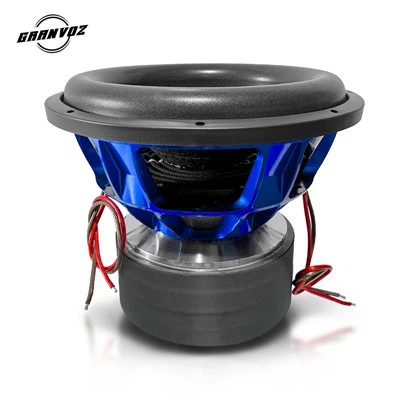
As a key device in the audio system that focuses on low-frequency performance, subwoofers add a shocking auditory experience to home theaters, car audio and professional audio systems with their powerful bass effects. For suppliers, understanding the basic composition and cabinet design of subwoofers will help better meet customer needs and provide accurate products and services.
This article will help you sort out the core components and common cabinet types of subwoofers to help you grasp the key points in supply chain management and product development.
Main components of subwoofers
1. Speaker unit
The "heart" of the subwoofer is responsible for converting electrical signals into low-frequency sounds. Key parameters include unit caliber, diaphragm material and magnetic circuit design, which directly affect the depth and strength of the bass.
2. Speaker cabinet
The cabinet is not only the "carrier" of the speaker, but also a key structure that affects the bass performance. A well-designed cabinet can effectively improve the clarity and impact of the sound.
3. Power amplifier (for active subwoofers only)
The active subwoofer has an integrated power amplifier that is responsible for driving the speaker unit. The power and performance stability of the amplifier determine the output capacity and sound quality of the subwoofer.
Common cabinet types and their characteristics
1. Sealed Enclosure
The structure is compact and the interior of the cabinet is sealed to ensure stable air density and provide clean and compact low-frequency response. Suitable for occasions with high requirements for low-frequency accuracy and control.
2. Bass Reflex
The reflex hole (port) designed in the cabinet enhances the low-frequency output, improves the loudness and low-frequency extension of the sound effect, and is suitable for users who need stronger bass effects.
3. Transmission Line
The complex pipe structure is used to guide low-frequency sound waves, effectively extend the low-frequency response, and provide deep and natural bass. It is usually larger in structure and has a higher manufacturing cost.
Speaker unit quality: Material selection and craftsmanship directly affect durability and sound quality. High-quality units are the basis of subwoofer performance.
Cabinet design process: details such as sealing, reflection hole size and position, transmission line length, etc. are related to sound quality performance and user experience.
Power amplifier parameters: power matching, heat dissipation design and stability to ensure stable sound quality under long-term high-load operation.
Material selection and cost control: The materials used for the cabinet must take into account both acoustic performance and manufacturing cost to find the best balance.