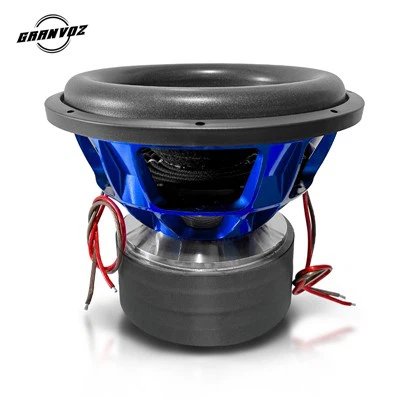
How different speaker materials affect sound quality
You want a great-sounding speaker, and you start by choosing the right materials for each of the speaker's components. You have to consider what to use for the voice coil, magnet, basket, cone (or diaphragm), grille, suspension elements, and enclosure.
Voice Coil Speaker Voice Coil

The voice coil works within a permanent magnetic field, and it converts the electrical energy input to the speaker into mechanical energy and causes the cone to vibrate back and forth to produce sound waves. The voice coil is usually made of copper wire wound on a bobbin. The bobbin can be made of paper, aluminum, Nomex, polyimide film, or fiberglass. One thing to consider is how well the voice coil material dissipates heat. Only a small portion of the electrical energy entering the speaker is converted into sound, and most of it is converted into heat, which can damage the speaker or affect the sound quality if it is not designed properly.
Speaker Magnet
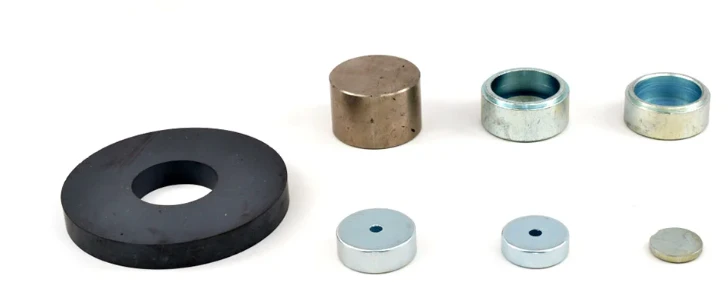
When alternating current is input into the voice coil, it turns the voice coil into an electromagnet with alternating magnetic polarity, which is then attracted or repelled relative to the poles of the permanent magnet attached to the speaker cone. There are three basic materials to choose from for this magnet. Ferrite is by far the cheapest and most commonly used material. It is also the heaviest, which affects the performance and overall weight of the speaker. Neodymium is a rare earth metal that is more expensive, but since less is needed, the speaker will be lighter. A third magnet material is Alnico, which is composed of aluminum, nickel, and cobalt. Alnico magnets have been used in speakers for decades, but are most commonly used in guitar speakers today.
Speaker Basket
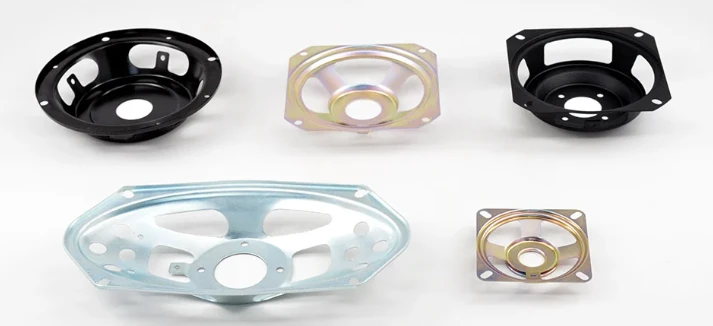
All the parts that make up a speaker are attached in some way to a structural frame commonly called a speaker basket. The vast majority of speaker baskets are made of either stamped steel or cast aluminum. Cast aluminum is often used for larger speakers, but the decision of which metal to use depends largely on the weight of the magnets that the basket will support, its strength, and the appearance of the front of the speaker.
Speaker Cone
The speaker cone is attached to the voice coil and secured to the flange of the speaker basket. The cone must be made of a strong yet lightweight material because it acts as a piston to vibrate sound waves at frequencies ranging from 10 times per second on a woofer to 20,000 times per second on a tweeter. The cone material must also have damping properties. This means that it must stop when the music stops and not continue to "ring" with unwanted sound. Typically, a dust cap is placed over the voice coil and on top of the cone. It functions as part of the cone, but keeps the area inside the voice coil free of external debris. It is often an important component of high frequency propagation.
Cones can be made of specially coated paper, polypropylene (plastic), impregnated cloth, metals such as aluminum, or composite materials such as carbon fiber. Each material has different advantages and disadvantages, and trade-offs in terms of weight, resonance, cost, and durability. For example, do you want a speaker that handles low frequencies well? Then aluminum, thick paper, or polypropylene may be your best choice, as they will not flex from the force of sound waves. Midrange and full-range speakers often use paper cones.
Loudspeaker Suspension Elements
The moving parts of a speaker (the cone and voice coil) must be fixed in a piston-like motion and minimize lateral movement that could cause friction or stray noise.
There are usually two suspension elements in a loudspeaker. The most visible suspension element is mounted to the cone on the inside and the basket on the outside. This is called the cone surround and is usually made of cloth, various rubbers, or foams. Sometimes it is actually a molded extension of the cone, made integrally with the cone. In addition to being a lateral stabilizer, it helps determine the compliance of the speaker, and therefore the type of speaker. Low frequency speakers usually have a highly compliant surround, while tweeters have a more rigid surround.
The second suspension element may not be visible when the speaker is mounted in its enclosure. This element is often called a spider (because of its spider-like appearance in the early days of speaker design). It also helps to stabilize the moving element laterally and provides additional stiffness as needed. The spider is usually made of thin sheets of phenolic-treated cotton or polyester cotton that are corrugated to allow for spring-like movement.

Speaker Grille
The grille covers and protects the cone from things like dust, moisture, heat, cold, or debris. The grille also gives the speaker many aesthetic qualities. From an acoustic point of view, it is best to have nothing in front of the cone, but this is often not possible. Whether the grille is made of plastic, metal, or fabric, it is important to test the effect of the grille on the sound quality.

Speaker Enclosure
Another important acoustic (and sometimes aesthetic) decision is choosing the right speaker enclosure. Most enclosures are made of wood because wood is light, durable, and can be machined into almost any shape. Poplar and Baltic birch (a type of plywood) are the most common, as well as medium-density fiberboard (MDF). If you need an enclosure that is small but also resistant to moisture or scratches, plastic is an option. But it may not have the sound-isolating properties of wood, and if the plastic enclosure is not designed correctly, the overall sound quality may suffer.

Testing speakers during the design and construction phase is the only way to determine how various materials affect sound quality.