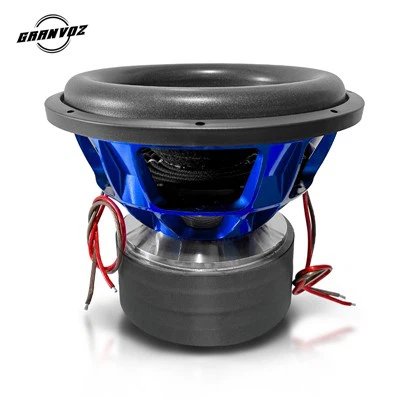
The performance and sound quality of ultrasonic speakers depend largely on the materials used. The following are key factors to consider when selecting ultrasonic speaker materials:
1. Acoustic properties
- Acoustic impedance: The acoustic impedance of the material should be close to that of air to ensure that ultrasonic energy can be effectively transferred to the air. Materials with good acoustic impedance matching can reduce energy loss and improve the efficiency of the speaker.
- Sound velocity: The sound velocity of the material should be high to quickly transfer ultrasonic energy and improve the response speed and sound quality of the speaker.
2. Chemical stability
- The material should have good chemical stability to avoid chemical reactions during use, which will affect the performance and life of the speaker.
3. Mechanical strength
- The material should have sufficient mechanical strength to withstand ultrasonic vibration and external pressure to ensure the structural stability and durability of the speaker.
4. Thermal conductivity
- The thermal conductivity of the material has a significant effect on the conduction efficiency of ultrasonic waves. Materials with high thermal conductivity can accelerate the transfer of ultrasonic energy and improve the efficiency of the speaker.
5. Surface treatment
- Surface roughness treatment: Improving the roughness of the material surface helps to effectively absorb and transmit ultrasonic energy.
- Surface coating treatment: Applying a protective layer to improve the corrosion resistance and wear resistance of the material and extend the service life.
6. Cost-performance ratio
- Under the premise of ensuring performance, the cost of materials is also an important consideration. Choosing cost-effective materials can reduce production costs without affecting the performance of the speaker.
7. Environmental protection
- With the improvement of environmental awareness, it is becoming more and more important to choose degradable and pollution-free materials. Environmentally friendly materials not only conform to the concept of green environmental protection, but also reduce the impact on the environment.
Material type
Based on the above key factors, the commonly used material types for ultrasonic speakers include:
- Metal materials: such as titanium, stainless steel, etc., have good corrosion resistance and mechanical strength, and are suitable for high temperature and high pressure environments during the extraction process.
- Non-metal materials: such as polypropylene, polytetrafluoroethylene, etc., have good chemical stability and heat resistance, and are suitable for mild extraction conditions.
- Composite materials: Combine the advantages of metal and non-metal materials, suitable for complex extraction environments.
Conclusion
When selecting ultrasonic speaker materials, it is necessary to comprehensively consider multiple factors such as acoustic properties, chemical stability, mechanical strength, thermal conductivity, surface treatment, cost-performance ratio, and environmental protection. By rationally selecting materials, the performance and sound quality of ultrasonic speakers can be significantly improved to meet the needs of different application scenarios.