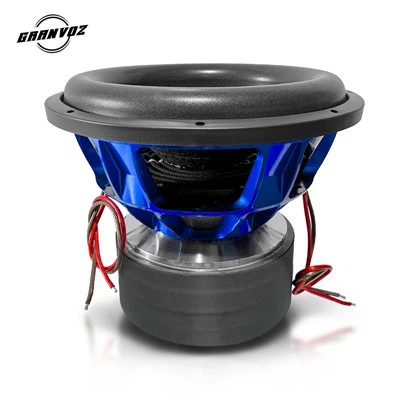
(1) The power of the speaker should not exceed its rated power, otherwise, the voice coil will be burnt or the voice coil will be vibrated. The operating voltage of electromagnetic and piezoelectric ceramic speakers should not exceed 30V.
(2) Note that the impedance of the loudspeaker should be matched with the output line. For details, please refer to the amplifier section.
(3) Choose the correct speaker model. If you use it in a square, you should use a tweeter; if you use it indoors, you should use a cone-type speaker and choose the auxiliary speaker. The high and low speakers can also be made into speaker groups to expand the frequency response range.
(4) When arranging the speakers, the sound must be evenly raised and sufficient sound level. If a single (point) speaker cannot meet the needs, it can be set at multiple points, so that every listener can get almost the same loudness and improve Sound clarity; with a good sense of orientation, the speaker should be installed more than 3 meters above the ground, so that the audience can "see" the speaker, and try to make the level of hearing (sound source) and vision (speaker) as much as possible Same, and the distance between the two speakers cannot be too large.
(5) Electric horn loudspeakers can only be used after the sound head is put on the horn, otherwise it is easy to damage the sound head.
(6) When two or more speakers are used together, attention must be paid to the phase problem. If it is reversed, the sound will be significantly weakened. The easiest way to determine the phase of the loudspeaker is to use the 50~250μA current block of a high-sensitivity meter or a multimeter, connect the test meter to the speaker terminal, hold the paper cone with both hands, and push it hard, then you can start from the movement of the needle. Direction to determine their phase. If the phase is the same, the hands move in one direction. At this time, the voice coil lead connected to the positive meter pen can be regarded as the "ten" level.